What Your Houston Business Website Needs | Best Industries for Web Design in Houston

Houston carries a different rhythm compared to many other major cities. Instead of relying on high-speed momentum, it grows through steady expansion, long-standing industrial strength, and constant inflow of new communities. Because the city is shaped by both its established roots and its emerging markets, the digital expectations of Houston’s residents and businesses are layered, diverse, and grounded in practicality. This blend is exactly why Houston business website needs feel different from the needs of businesses in purely tech-driven cities. They must respect the city’s industrial backbone while also accommodating the modern habits of a rapidly growing population.
A business website in Houston becomes an essential touchpoint. Residents turn to websites to learn about a company’s character, professionalism, and reliability. Newcomers use websites to explore neighborhoods, understand local services, and build trust with unfamiliar businesses. Longtime locals use websites to verify details, check hours, compare offerings, and decide whether a business feels aligned with their expectations. Across all these groups, a website becomes a steady, reliable presence that helps people feel confident about their choices. This is the heart of Houston business website needs: a digital space that balances clarity, sincerity, and modern functionality in a way that reflects the city itself.
Before discussing which industries benefit most from strong web design, it helps to understand the deeper forces that shape digital expectations in Houston. These forces come from the city’s economic landscape, its demographic variety, its cultural values, and the way businesses present themselves across different communities. When these influences are understood, it becomes clear why some industries rely heavily on strong digital experiences and how web design can help them better connect with customers.
Houston’s economy is shaped by large sectors such as energy, engineering, petrochemicals, manufacturing, and healthcare, and these industries create expectations for how businesses should present information online because people living and working in these fields are used to dealing with detailed processes, precise communication, and dependable operations. When a company in Houston builds a website, visitors often look for the same level of clarity they experience in the city’s major industries, which means a site needs to organize information in a straightforward way that helps people understand who the business is, what it offers, and why it can be trusted.
This connection between long-standing industries and digital behavior becomes a major driver of Houston business website needs, pushing companies to focus on structure and substance rather than surface-level design trends.
Houston residents are influenced by the city’s professional culture, and they tend to judge a business based on how clearly it presents itself online, which places responsibility on websites to act as honest reflections of the organizations behind them. When a site uses simple layouts, direct explanations, and real information, it signals that the business is consistent in the way it communicates, and this consistency builds confidence for visitors who evaluate companies based on reliability and transparency.
Over time, this pattern has shaped Houston business website needs by encouraging businesses to treat their websites as extensions of their operational standards, meaning that accuracy, clarity, and consistency matter as much online as they do in day-to-day work.
Houston’s economy has expanded beyond its traditional sectors, and this growth has introduced businesses that rely heavily on branding, digital storytelling, and user-friendly experiences to attract customers who may not have established loyalties or deep familiarity with the local market. As more creative studios, boutiques, restaurants, technology companies, and specialized service providers open across the city, the digital environment becomes more varied, and visitors begin expecting websites that guide them through information in a way that feels natural and easy to follow.
This shift places new pressure on Houston business website needs because companies must balance the direct communication preferred by long-standing industries with the smoother, more approachable digital experiences expected by newer audiences. The result is a blended set of expectations where websites must handle practical information without losing the ability to engage people who respond to clear structure and steady flow rather than decorative design elements.
Houston is widely recognized for its cultural and linguistic diversity, and this mix of backgrounds shapes the way people read, interpret, and interact with online information. When a website presents content in clear language, organizes information in a predictable flow, and avoids assumptions about what visitors already know, it becomes easier for people from different communities to understand the message without confusion. Because many residents approach websites with different levels of language proficiency or different cultural reference points, businesses must focus on clarity rather than stylistic complexity, which makes straightforward communication a central part of Houston business website needs and directly influences how content should be written and displayed.
Houston’s population continues to grow through younger residents and newly arrived professionals, and this group brings digital habits that rely on quick evaluations, mobile browsing, and immediate access to essential information. These visitors often compare several businesses in the same category, moving between websites on their phones and forming opinions within a few seconds, which means a site must load reliably, show its purpose quickly, and guide users without unnecessary barriers. This pattern does not eliminate the expectations shaped by older or more traditional audiences, but instead adds another layer to Houston business website needs by requiring businesses to offer information that is both precise enough for detail-oriented users and simple enough for people who prefer fast, mobile-first browsing.
Houston also includes large multilingual communities, particularly Spanish-speaking residents, and significant populations from Asian, Middle Eastern, and African backgrounds. When a website acknowledges these realities by incorporating bilingual sections, offering clear language options, or writing content that avoids cultural assumptions, it becomes more accessible and more aligned with the way people in the city actually seek information. Businesses that adapt their websites in this way create stronger connections with residents because they remove communication barriers that might prevent someone from understanding a service or feeling comfortable reaching out. As a result, multilingual awareness becomes a meaningful part of Houston business website needs, especially for industries where clarity and trust influence decision-making.
Houston’s culture places a strong emphasis on trust and long-term relationships, and this influences the way residents evaluate businesses online because many people decide who to work with based on comfort and perceived reliability rather than price alone. When someone searches for a healthcare provider, home contractor, attorney, or real estate professional, they often look for signs that the business communicates clearly and behaves consistently, which means a website needs to reflect sincerity through straightforward explanations, predictable navigation, and content that shows the people behind the service. These expectations form an important part of Houston business website needs because they directly influence whether a visitor feels confident enough to make contact.
Residents respond strongly to websites that explain services in clear terms, use plain language, and display real individuals instead of stock placeholders, since these elements help reduce uncertainty and make the business feel more grounded in the local community. A site that includes real team photos, detailed descriptions of how services work, and direct statements about processes or experience creates a sense of openness that matches the communication style many Houstonians value in face-to-face interactions. This approach supports Houston business website needs by showing visitors that the business is willing to share information without exaggeration or unnecessary complexity, which strengthens the feeling of reliability.
The expectation for transparency and honest communication does not arise from urgency or pressure but from a long-standing preference for meaningful, stable relationships between businesses and the people they serve. Residents want to understand who they are dealing with and what they can expect, and they prefer websites that help them reach that understanding without forcing them to sift through vague statements or overly promotional language. Houston business website needs must align with this cultural foundation by presenting information in a way that supports careful decision-making, reinforces trust, and respects the importance of reputation across many industries.
Houston’s wide geographic layout encourages residents to rely heavily on local search when choosing where to shop, dine, or find professional services, and this behavior significantly influences how businesses must structure their websites. People often begin their search on a mobile device while they are at home, commuting, or moving through their neighborhood, and they tend to use “near me” queries or include local identifiers such as the name of their district or suburb. This reliance on geographically specific searches means that Houston business website needs must account for the way search engines interpret location signals, which requires websites to present clear, accessible information that aligns with how residents navigate the city.
For a Houston business, defining its service area in straightforward terms plays a crucial role in helping visitors understand whether the company operates in their part of the city, and this information becomes even more important in industries where people need quick solutions or local familiarity. Websites that clearly display their address, hours of operation, and regions served tend to perform better because they match the way residents filter options during their search process. When a site reflects Houston’s geographic reality through accurate contact details and location-focused content, it aligns with Houston business website needs by making the decision-making process easier for visitors who want clear confirmation that they are looking at a nearby provider.
Local searches often happen on mobile networks that vary in speed depending on the area, and this makes website performance a critical factor in user experience. Slow-loading pages can cause visitors to leave quickly, especially when they are searching for services in real time or comparing several businesses within minutes. Because of this, Houston business website needs thoughtful attention to loading behavior, mobile responsiveness, and the prioritization of content that users expect to see first. A well-performing site gives people the ability to gather information without delay, which is essential in a city where distance, traffic, and neighborhood differences shape how residents decide where to go and whom to contact.
Houston’s identity is shaped by industries that have operated in the region for decades, and these sectors influence the type of communication residents expect to see from businesses online. People who work in fields like energy, engineering, healthcare, and industrial services are accustomed to information that is organized, practical, and reliable, and they tend to respond well to websites that follow a similar structure. When a website presents information in a steady and predictable way, it aligns with the expectations formed by these long-established industries, and this alignment becomes a meaningful part of Houston business website needs.
At the same time, Houston continues to welcome new residents, emerging companies, and younger audiences who are familiar with digital tools and expect websites to function smoothly on mobile devices, present information quickly, and provide a clean experience without unnecessary complexity. These users are not looking for decorative features as much as they want immediate clarity, and they often judge a website within seconds of landing on it. This behavior introduces a new set of expectations, and it pushes Houston businesses to incorporate streamlined layouts, clear typography, and intuitive navigation that make information easier to access. These developments expand the scope of Houston business website needs by adding a layer of usability that speaks to newer digital habits.
Because the city represents both long-standing traditions and ongoing growth, the most effective Houston websites are those that combine structured, dependable presentation with design choices that support straightforward interactions. A site that leans too heavily into modern visuals without providing substantial information may feel disconnected from the values of long-time residents who prioritize clarity, while a site that relies too much on traditional layouts may feel outdated to newer audiences who expect a smoother digital experience. Houston business website needs require a balance that reflects the city’s dual character, and businesses succeed when they create websites that feel stable enough to inspire confidence while offering enough simplicity and efficiency to meet modern expectations.
Houston’s healthcare environment is shaped by the Texas Medical Center and a vast network of clinics and specialty practices, and this scale influences how patients expect medical websites to communicate because they assume the online experience will match the professionalism they encounter in the city’s healthcare institutions.
Visitors arrive expecting fast access to service details, insurance acceptance, appointment availability, and provider qualifications, and these expectations make clarity and immediate information central to Houston business website needs within healthcare.
Since patients often search from mobile devices and come from many cultural or linguistic backgrounds, medical websites must offer plain-language explanations, bilingual content when appropriate, and navigation that makes sense even for someone visiting under stress. Security and credibility also matter because forms and portals often involve sensitive data, which makes a stable structure essential.
Houston’s real estate landscape includes long-standing neighborhoods, expanding suburbs, and new developments, and websites must handle large amounts of information while maintaining stability and clarity for users who compare homes at a fast pace.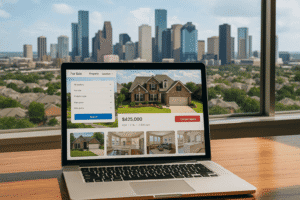
Buyers and renters expect to view accurate photos, organized galleries, and detailed descriptions that help them understand a property without needing external research, and this expectation shapes the way Houston business website needs evolve in real estate.
Real estate decisions depend heavily on neighborhood factors such as schools, commute patterns, and access to employment centers, so websites must communicate local expertise clearly and support that message with mapping tools, search filters, and simple contact paths.
 How Diners Use Restaurant Websites
Restaurant websites in Houston must help visitors understand the cuisine, the price range, the atmosphere, and the location because many people decide where to eat based on what they find online while they are already out in the city.
Menus must load quickly and be easy to read on phones, and this requirement plays a significant role in Houston business website needs for hospitality because users often abandon PDF menus or poorly formatted pages that slow down their search for information.
Photography helps diners understand dishes from cuisines they may not know, and accurate visuals help visitors choose confidently before they arrive, especially in a city with strong culinary diversity.
Legal clients often arrive with urgent concerns, and they need websites that explain services in direct language that does not increase uncertainty or confusion, which makes clarity a central part of Houston business website needs for law firms.
Attorney profiles, case descriptions, and explanations of legal processes help clients evaluate whether a firm has the experience they need, and these elements must be presented in a predictable structure that reflects the seriousness of the field.
Because Houston includes large immigrant communities, law firms often benefit from bilingual or culturally considerate content that allows users to understand their options and feel comfortable reaching out.
Residents searching for HVAC repair, plumbing help, or electrical services often need quick solutions, and websites must tell users immediately what the company offers, which areas it serves, and how fast it can respond.
Because inviting someone into a home requires confidence, websites must show licenses, insurance, reviews, and examples of past work in a clear structure that feels dependable.
Many visitors search while standing in their driveway, kitchen, or garage, so mobile usability becomes a crucial part of Houston business website needs in the trades.
Houston’s retail environment is broad, and shoppers expect product pages that show clear information, straightforward pricing, and simple navigation, especially when comparing multiple stores online.
Many Houstonians browse products on their phones while shopping in person or researching at home, so e-commerce websites must load efficiently and present essential details without forcing additional steps.
Return policies, delivery timelines, and customer service availability help shoppers feel comfortable completing a purchase, and this level of clarity aligns closely with Houston business website needs in retail.
Educational institutions must explain programs, schedules, admission steps, and learning formats in a direct and structured way because students and parents often compare several options before making a decision.
Houston’s diversity includes many bilingual families, so clear language and easy navigation help educational websites reach more users without creating barriers.
Many students and adult learners browse programs while balancing work or commuting, and this makes mobile-first design a foundational component of Houston business website needs in education.
Energy and industrial companies handle complex and specialized work, and their websites must communicate capabilities through structured explanations, technical documents, and case studies written in a way that supports professional evaluation.
Engineers, procurement specialists, and regulators expect detailed content, so a website must offer depth without sacrificing clarity, and this requirement forms a major part of Houston business website needs in industrial fields.
Because many energy and engineering companies operate internationally, career sections and corporate information must be easy to navigate for users inside and outside Houston, with performance and structure that reflect global expectations.
Houston’s industries vary widely, yet they share a common need for websites that communicate information in a direct and uncomplicated way because the city’s large and diverse population includes residents with different cultural backgrounds, language proficiency levels, and digital habits. When a website organizes content predictably and avoids unnecessary complexity, visitors can understand the business more easily regardless of their background, which makes clarity an essential element of Houston business website needs. This expectation grows even stronger in a city where people rely on digital research to compare multiple providers before making a decision.
Mobile browsing plays a major role in how Houstonians interact with websites, and this behavior affects every industry because residents often look up businesses while commuting, running errands, or exploring different areas of the city. Websites that load quickly, present essential information at the top of the page, and maintain readable layout structures improve engagement because users do not have to navigate through unnecessary layers to find what they need. This reliance on mobile devices creates a consistent expectation across the region and explains why mobile compatibility and efficient performance are central components of Houston business website needs.
Local search behavior has a strong impact on digital expectations because Houston’s wide geography forces residents to filter businesses by neighborhood, district, or nearby landmarks. When a website reflects this reality through clear location pages, accurate metadata, and region-focused content, it aligns more closely with the way residents search and compare local services. Businesses that serve multiple areas within Greater Houston benefit from structuring their websites around specific service regions, since visitors want quick confirmation that a company operates near them. This geographic awareness becomes an important part of Houston business website needs and plays a direct role in search visibility and user satisfaction.
Trust influences nearly every digital interaction in Houston because residents tend to rely on credibility signals when choosing contractors, attorneys, healthcare providers, restaurants, and many other types of businesses. Websites that present experience, professional credentials, customer feedback, and evidence of community involvement in a straightforward manner help visitors feel more confident about their choice. This pattern reflects cultural tendencies found across the city, where reliability and reputation matter as much as price or convenience. As a result, trust-building elements become a defining part of Houston business website needs, shaping how businesses write content, display information, and present themselves online.
Houston sits at a point where long-standing expectations shaped by older industries blend with newer digital habits brought by a younger and more mobile population, which means businesses can no longer treat their websites as optional or secondary. When a site meets Houston business website needs by offering direct communication, structured information, and dependable performance, it strengthens customer confidence, increases visibility in local search, and helps visitors understand the business without effort. A site that fails to meet these expectations risks being overlooked or misread in a market where online impressions often shape first opinions.
A strong website acts as an extension of a business’s personality because it provides visitors with a consistent place to learn about services, understand what to expect, and verify essential details. It also creates a bridge between communities with different cultural and linguistic backgrounds by offering information in a straightforward and approachable way. In a city where many industries value accuracy and dependability, this ability to guide users through information smoothly becomes a strategic advantage rather than a decorative element.
A Houston website must reflect the expectations of its industry because Houston business website needs are shaped by how people evaluate professionals within that field. A medical patient, a homebuyer, a restaurant visitor, and someone needing urgent repairs all look for different types of information, and the design must match those patterns. When the website aligns with behaviors common to its industry, it feels more intuitive and helps users make decisions with less uncertainty.
Industries like energy, engineering, law, and healthcare often attract audiences who respond best to predictable layouts, measured presentation, and information delivered in a structured format. Websites in these fields benefit from organized sections, clear page hierarchy, and text that explains services without unnecessary embellishment. This approach supports Houston business website needs by giving users a sense of stability and competence, which is essential in fields where accuracy matters.
Houston continues to welcome younger residents and international communities, which brings digital habits centered around mobile browsing, clean interfaces, and quick understanding of key information. These visitors expect websites that get to the point and make navigation easy. Their behavior adds a modern layer to Houston business website needs by encouraging designs that combine professional tone with smooth usability and uncomplicated visual structure.
Some industries must present detailed technical material or regulatory content, while others work best with brief explanations. An engineering firm may require a website that organizes complex documents and case studies, while a restaurant benefits from simple menus and engaging visuals. When a website matches the amount of information an industry requires, it avoids overwhelming visitors or leaving them with too little detail, and this balance sits at the center of Houston business website needs.
Houston’s size forces residents to confirm whether a business operates in their part of the city before taking action. Home service providers, real estate agencies, and educational institutions all rely on websites that present service areas, neighborhood information, and regional distinctions in a straightforward manner. When geographic information is easy to verify, the website aligns with real user habits and strengthens performance in local search.
Houston’s multicultural population includes residents who benefit from simplified vocabulary or bilingual content, even when they are comfortable with English. In industries such as healthcare, legal services, and education, websites that offer easily understood explanations or multiple language options help users feel more informed and more willing to continue exploring. This focus on linguistic accessibility is an important part of Houston business website needs and plays a direct role in building trust.
Different industries rely on different types of reassurance. Legal clients look for attorney backgrounds and case experience. Homeowners look for licenses, insurance, and examples of completed work. Patients look for medical credentials and understandable service explanations. Shoppers look for straightforward return policies and predictable delivery. When a website positions these elements effectively, it meets both the emotional and practical components of Houston business website needs and gives users confidence to act.
Regardless of industry, most Houstonians browse and compare options using their phones while moving through their day, so websites must load reliably and display essential actions without delays. Restaurants, home services, real estate, and retail all depend on this level of responsiveness, and well-performing websites consistently match the modern expectations shaping Houston business website needs.
Industries where decisions involve risk or major investment require websites that communicate in a steady, well-organized way. Visitors want predictable navigation and explanations that support understanding without overwhelming them. A site that feels informal may create doubt, while one that overwhelms with dense technical language can discourage visitors altogether. The right balance shows expertise while remaining accessible.
Businesses in lifestyle or experience-focused sectors rely on visuals to communicate what they offer. Restaurants, boutiques, and creative studios benefit from photography and brand expression that help visitors anticipate the experience before they arrive. When visuals feel intentional and grounded in the business’s identity, they support Houston business website needs by helping visitors form quick, meaningful impressions.
Across all industries, the strongest websites are the ones that respect Houston’s practical expectations, cultural diversity, and real search habits. A site must present information without barriers, support the steady professionalism of legacy industries, and also appeal to newer audiences who expect efficient navigation and straightforward communication. When a website reflects Houston’s unique combination of long-standing tradition and ongoing growth, it becomes a tool that naturally supports how residents search, compare, and make decisions, and this alignment remains the foundation of Houston business website needs.
Houston is a city defined by steady expansion, strong industrial foundations, and a population that continues to grow more diverse and digitally engaged every year. This combination creates a unique environment where business websites must balance clarity, professionalism, accessibility, and modern usability. Across every major sector, from healthcare and real estate to restaurants, legal services, home trades, e-commerce, education, and industrial firms, the same underlying pattern emerges. The most effective websites are those that accurately reflect how people in Houston search, compare, and make decisions.


276 5th Ave 7th Floor, Suite 704B, New York, NY 10001