SEO for Local Businesses: Proven Strategies to Get Found, Attract More Customers, and Grow Online

For a local business, having a website is only part of building a strong online presence. Your potential customers need to be able to find your business when they are searching for the products or services you provide. Someone looking for a lawyer, home care agency, salon, contractor, restaurant, medical practice, or marketing agency may search Google before making a decision.
They might search for a specific service, add their city or neighborhood, or simply type “near me.” If your business does not appear in those searches, your competitors have a better opportunity to get that customer. Local SEO helps businesses improve their visibility in search engines and connect with customers who are searching for relevant services in a particular area. It involves much more than adding a city name to your website.
SEO for local businesses is the process of improving a company’s online presence so it has a better chance of appearing when people search for relevant products or services in a specific geographic area. For example, imagine a business that provides digital marketing services in New York.
Potential customers might search for:
These searches show a clear connection between the service and the customer’s location. A business that has invested in local search optimization has a better opportunity to appear in front of those potential customers. Local SEO can involve optimizing both your website and external business profiles. It can also include improving your online reputation, creating useful local content, earning relevant links, and making sure your business information is accurate across the web.
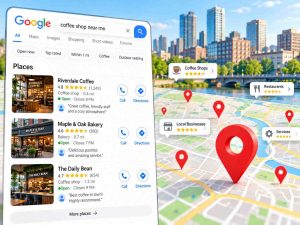
Understanding how customers search is one of the first steps in developing an effective local SEO strategy. Different searches can indicate different levels of intent.
A customer may search for a specific service without mentioning a location. Examples include:
Google may still use the searcher’s location to provide relevant local results.
Customers may include their location directly in the search.
Examples:
These searches make geographic intent very clear.
People frequently use location-based phrases such as:
Google can use the searcher’s location to determine which businesses are relevant. This is one reason local search optimization is particularly important for businesses that depend on customers within a specific geographic area.
Customers may also search directly for a business they have already heard about.
For example:
Brand searches can be an indication that other marketing activities are successfully creating awareness.
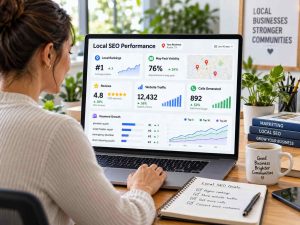
Search engines and customers need accurate business information. Your business name, address, phone number, website, and other important details should be consistent wherever your company appears online. This can include:
Inconsistent information can create confusion. For example, if your website lists one phone number but several directories display another, a potential customer may not know which number to use. Businesses should regularly review important listings and update outdated information. This is a basic but important part of local search optimization.
When customers search for a local business, they often compare several options. Reviews can play an important role in that decision. A business with genuine, recent customer feedback can appear more trustworthy than one with little or no review activity. However, businesses should focus on obtaining real customer reviews, not trying to manipulate their reputation.
Good review practices include:
Reviews can also provide useful information for your marketing strategy. If customers repeatedly mention:
Local SEO is not only about Google Maps. Your website remains one of the most important assets in your digital marketing strategy. When someone discovers your business through search, your website gives them an opportunity to learn more. Your website should make it clear:
A poorly structured website can waste the visibility created by your SEO efforts. Imagine someone finds your business in Google, clicks your website, and discovers that the site is:
That visitor may simply return to Google and choose another business. This is why local SEO services should not operate separately from website optimization and conversion strategy.
A strong content strategy can support SEO for local businesses by answering the questions customers are already asking. For example, an SEO agency might publish:
These topics can attract people at different stages of the buying process. Some readers may simply be researching. Others may be actively comparing service providers. A well-written article can introduce your business to both audiences while demonstrating knowledge of the subject.
Creating local content does not mean writing hundreds of pages with a city name inserted into every paragraph. For example, this type of content is weak: We are an SEO company in New York providing SEO services in New York for businesses in New York. It provides almost no useful information. Instead, create content around genuine local needs. For example: How New York Businesses Can Improve Their Local Search Visibility
An article like this can discuss:
The location is relevant because it is part of the topic. That is much more useful than simply repeating the city name.
Businesses serving multiple cities or areas may benefit from dedicated location pages. For example, a company could serve:
Each location page should provide genuinely useful information. It might explain:
Avoid creating dozens of pages that are essentially identical except for the city name. If the content is nearly identical, the pages provide little additional value to users. Good local SEO services focus on usefulness rather than producing large numbers of low-value pages.
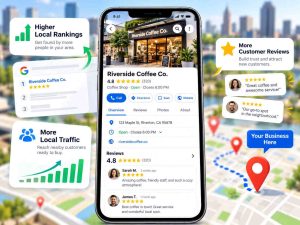
Technical SEO is another part of local SEO strategy. Even the best content can struggle if a website has significant technical problems. Important areas include:
Many local searches happen on mobile devices, so your website should work smoothly across smartphones, tablets, and desktop computers. Buttons should be easy to tap, text should remain clear and readable on smaller screens, and important information such as services, contact details, and calls to action should be easy to find without unnecessary scrolling or zooming.
A slow website can create a poor user experience and cause visitors to leave before the page finishes loading. Improving website performance may involve compressing images, reducing unnecessary scripts, using reliable hosting, optimizing code, implementing efficient caching, and improving the overall page structure so content loads faster and more efficiently.
A logical website structure helps both users and search engines understand and navigate your content. Your homepage should connect clearly to important sections such as services, SEO, local SEO, location pages, and your contact page. Clear navigation makes important pages easier to discover and helps visitors move through your website without confusion.
Important pages need to be accessible to search engines and properly configured for indexing. Technical issues such as incorrect noindex settings, blocked pages, broken internal links, or crawlability problems can prevent valuable content from appearing in search results, even when the content itself is well written and optimized.
Links from other websites can contribute to a business’s authority. For local companies, relevant local relationships can create useful opportunities. Potential sources include:
The objective should not be to collect as many links as possible. Quality and relevance matter. A legitimate mention from a respected local organization may be much more useful than dozens of irrelevant links from low-quality websites.
Content marketing and local SEO can support one another. Suppose you operate a home care agency in Denver. Your website may have service pages for:
You could then publish useful articles related to those services. For example:
These articles can attract people who are researching care options. They also give you opportunities to connect readers with relevant service pages. This creates a useful path:
Search → Article → Service Page → Contact → Customer
SEO and Google Ads are different channels, but they can complement each other. Google Ads can help businesses reach potential customers through paid search campaigns. SEO focuses on improving organic visibility.
For example, a business launching a new service may use Google Ads to generate immediate visibility while developing organic rankings through SEO. Paid campaigns can also provide useful marketing data. You may learn:
That information can help inform your broader digital marketing strategy.
Ranking higher can be valuable, but rankings are not the final objective. Suppose your website reaches the first page for several keywords but receives very few inquiries. You need to ask why. Perhaps:
A strong local SEO strategy connects search visibility with business outcomes. Those outcomes can include:
The exact conversion depends on the business.
A visitor who finds your business through Google should immediately understand what to do next. Your website should use clear calls to action such as getting a quote, scheduling a consultation, calling your business, booking an appointment, or requesting more information. The right call to action depends on your business model. A local restaurant may focus on reservations, while a law firm may encourage visitors to schedule consultations.
A contractor may focus on quote requests, and a marketing agency may direct potential clients toward booking a consultation. SEO can bring potential customers to your website, but your website still needs to make the next step simple and obvious. Clear calls to action help turn website visitors into leads, appointments, and paying customers.
SEO should be measured over time. Useful metrics can include:
You should also look beyond rankings. For example, moving from position 30 to position 10 is meaningful. But if the keyword produces visitors who never become customers, it may not have significant business value. The best SEO for local businesses connects visibility with meaningful actions.
SEO is not usually an overnight marketing tactic. The timeline depends on factors such as:
A typical SEO campaign begins with research and a detailed website audit, followed by keyword research and technical optimization. From there, the focus moves to on-page optimization, content creation, Google Business Profile optimization, local citation building, and link building. Performance should then be regularly analyzed to understand what is working and where further improvements are needed. The important thing is to approach SEO as an ongoing process rather than a one-time task. Consistent optimization, monitoring, and improvement can help a business strengthen its visibility and remain competitive over time.

For a local company, visibility can directly influence growth. When customers search for your services, you want your business to be among the options they consider. A strong local SEO strategy can help you build that visibility over time.
It can help potential customers: Find your business → Learn about your services → Compare your company → Trust your brand → Contact you That is much more valuable than simply increasing website traffic. The strongest local SEO services combine search optimization with useful content, a well-built website, accurate business information, customer reviews, and a clear conversion path.
SEO for local businesses is ultimately about connecting your business with people who are already looking for what you provide. Your Google Business Profile helps people discover you in local search. Your website gives them more information. Your content answers their questions. Reviews help build trust. Technical SEO creates a stronger foundation. And clear calls to action give interested visitors an easy way to contact you. There is no single shortcut that guarantees local search success.
The businesses that build lasting visibility usually focus on the fundamentals: creating useful content, maintaining accurate information, optimizing their website, understanding customer search behavior, building credibility, and continually improving based on performance. If your business depends on customers in a particular city, neighborhood, or service area, local search optimization should be an important part of your digital marketing strategy. The goal is simple: Get found by the right people, give them a reason to trust you, and make it easy for them to become customers.